

Introducing GPS in the fleet: how implementation runs in 30 days
Introduce GPS tracking in a structured way: a 30-day plan from clarifying goals through test and team communication to rollout, with the most common mistakes.

How do you introduce GPS tracking in the fleet?
A 30-day plan in four weeks has proven itself: clarify goals and owners (week 1), choose a system and inform the team (week 2), test with two to three vehicles (week 3), then roll out to the whole fleet with a short briefing (week 4). With OBD devices a unit is plugged in in under a minute.
The technical part of a GPS introduction is trivial today: device into the OBD port, ignition on, the vehicle appears on the map. That introductions still fail or drag on for months almost never lies with the technology, but with unclear goals, bypassed staff and a missing test phase. This plan walks through introduction in four weeks, with the stumbling blocks where they actually sit.
Week 1: clarify goals and owners
Before a device is ordered, three questions need answers:
What should the system solve? “Transparency” is not a goal. Concrete goals are: eliminate location call-backs, automate the logbook, assignment evidence for clients, an alert on unauthorised vehicle movement. The goal definition later decides configuration, zones and reports, and it is the basis for privacy documentation.
Who owns the introduction? One person who cares is enough, but you need them: someone who distributes devices, names vehicles in the platform and answers questions from the team.
What will deliberately not be done? Just as important: write down what the data will not be used for (for example individual performance scoring). That is the strongest argument in team communication and relevant for legal cover. Details in fleet management and privacy in Austria.
Week 2: choose a system and inform the team
Selection. The five criteria from the foundation guide in brief: short update interval (30 s or less), self-install without a workshop, cancel monthly, hardware and SIM in the price, EU data hosting. Anyone comparing several providers should watch hidden items: setup fees, minimum terms, cost per export.
Team information, the most important step of the whole introduction. Before the first device is fitted, drivers belong at the table: what is being introduced, why, what is captured, what is expressly not, who has access. In Austria, co-determination rights under the Labour Constitution Act apply to control measures that touch human dignity. If there is a works council, the path runs through a works agreement. Independently of the legal position: a team that understands the purpose carries the system. A team that “discovers” it in the vehicle boycotts it.
Week 3: test phase with two to three vehicles
Not the whole fleet at once. Two or three vehicles with open drivers are enough to check everything essential:
- Install: plug in the OBD connector, ignition on, the vehicle appears in the platform. At TrackLog that takes under a minute per vehicle.
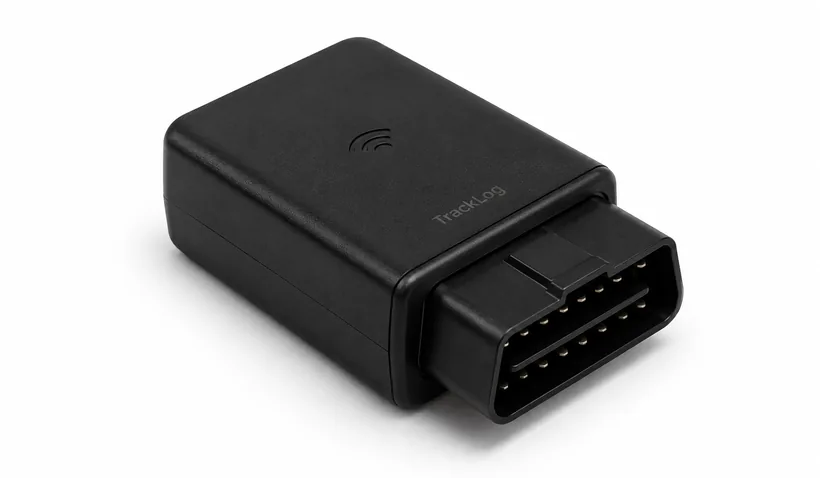
The test phase is also the moment to collect feedback from the team and visibly act on it. That pays directly into acceptance at rollout.
Week 4: rollout and briefing
Full rollout with OBD systems is a logistics act, not a technical one: distribute devices, plug in, name and assign vehicles in the platform. For a fleet of 20 vehicles that is done in a morning.
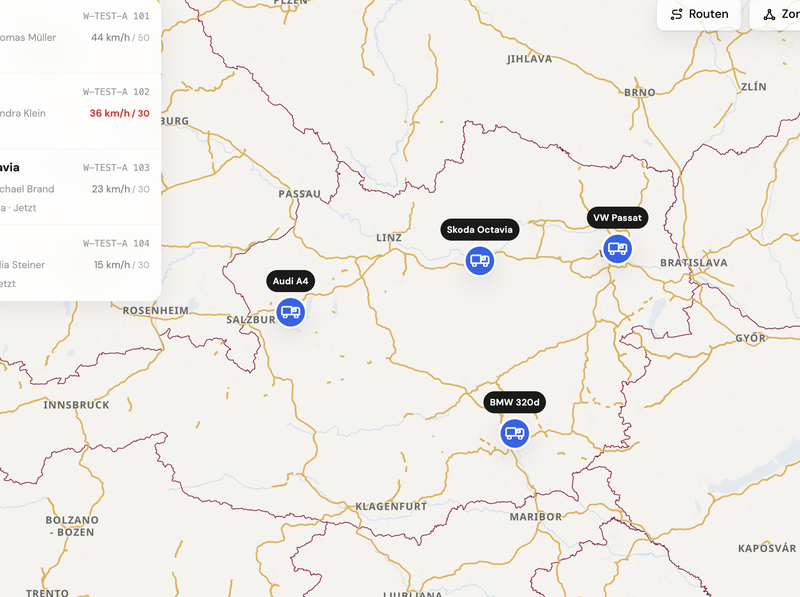
Plus a short briefing for everyone who works with the platform: read the live map, follow trips and stops, export the logbook, understand alerts. 30 minutes is usually enough. Good systems largely explain themselves.
From now on: check the goals defined in week 1 against reality after four to six weeks. Have location calls actually fallen? Is the logbook being used? Which metrics fit that is in the fleet KPIs guide.
The three most common mistakes
- Introduction without a purpose. “We’ll see what the data produces” leads to configuration sprawl, alert fatigue and a team that suspects surveillance. Goal first, then device.
- Presenting the team with a fait accompli. The most expensive mistake, legally risky and practically devastating. Information and involvement cost an hour; lost trust costs months.
- Skipping the test phase. Anyone who rolls out fully at once discovers configuration questions, special cases and process gaps with the whole fleet instead of with three vehicles.
Conclusion
A GPS introduction can be done cleanly in 30 days if the order is right: goals before technology, team before rollout, test before full operation. The technical effort with OBD systems is minimal, as is the contract risk with monthly-cancellable providers. To start with a small test fleet: Order now. The device arrives by post, plugged in in under 1 minute, cancel monthly, pricing without small print.
Frequently asked questions
How long does introducing GPS tracking really take?
Does the team have to be informed in advance?
Is a workshop needed for installation?
What are the most common mistakes at introduction?
See the fleet live. Today.
The device arrives by post. Plugged in in under 1 minute, cancel monthly.
Order now