

7 benefits of real-time tracking for logistics and service fleets
Fewer call-backs, reliable ETAs, less idle time: the 7 most important benefits of real-time tracking for logistics and service fleets.

What benefits does real-time tracking bring in the fleet?
The main benefits: fewer call-backs to drivers, reliable arrival times for customers, faster dispatch, complete documentation of every trip and stop, better vehicle protection, less idle time through visible dwell, and an automatic logbook without paper.
Real-time tracking is often misunderstood as a control instrument. In practice it is the opposite: a tool that replaces control with visibility and thereby removes the daily time sinks in the fleet. Here are the seven benefits logistics and service fleets actually feel.
1. Fewer call-backs to drivers
The classic: a customer asks where the delivery is. Dispatch calls the driver. The driver guesses. Dispatch calls the customer back. Four contacts for information a live map delivers in two seconds. With real-time tracking, dispatch answers location questions itself, without ringing someone out of traffic. Both sides benefit: the office gets answers, drivers get quiet.
2. Reliable arrival times instead of estimates
An ETA from real GPS data is something other than “should be there around noon”. Anyone who calculates expected arrival from the actual position and route can tell the customer proactively, by phone or automatic SMS shortly before arrival. That cuts wasted journeys, waiting at ramps and “where are you?” calls to a minimum.
3. Faster dispatch for last-minute jobs
An emergency job comes in: which vehicle is closest and free? Without tracking, a round of phone calls starts. With a live map the answer is a glance, including status (moving, dwell, parked). Service fleets in trades gain minutes here every day that add up to hours over the week. More on industry workflows: trades.
4. Complete documentation without paper
Every trip, every stop, every dwell is logged automatically. That replaces handwritten logbooks, reconstructions after the fact (“were you at customer X on Tuesday?”) and arguments about travel time. For complaints or billing questions the evidence is already there, as a stop history with timestamps or as an exportable logbook (PDF/CSV).
5. Better protection of the vehicles
Real-time tracking does not make vehicles theft-proof, but it shortens the response chain drastically. Alerts for tampering with the device or unauthorised movement outside business hours arrive immediately, including the last known location. Combined with geofencing you can also draw virtual zones around the yard or a job site that report entries and exits automatically.
6. Less idle time through visible dwell
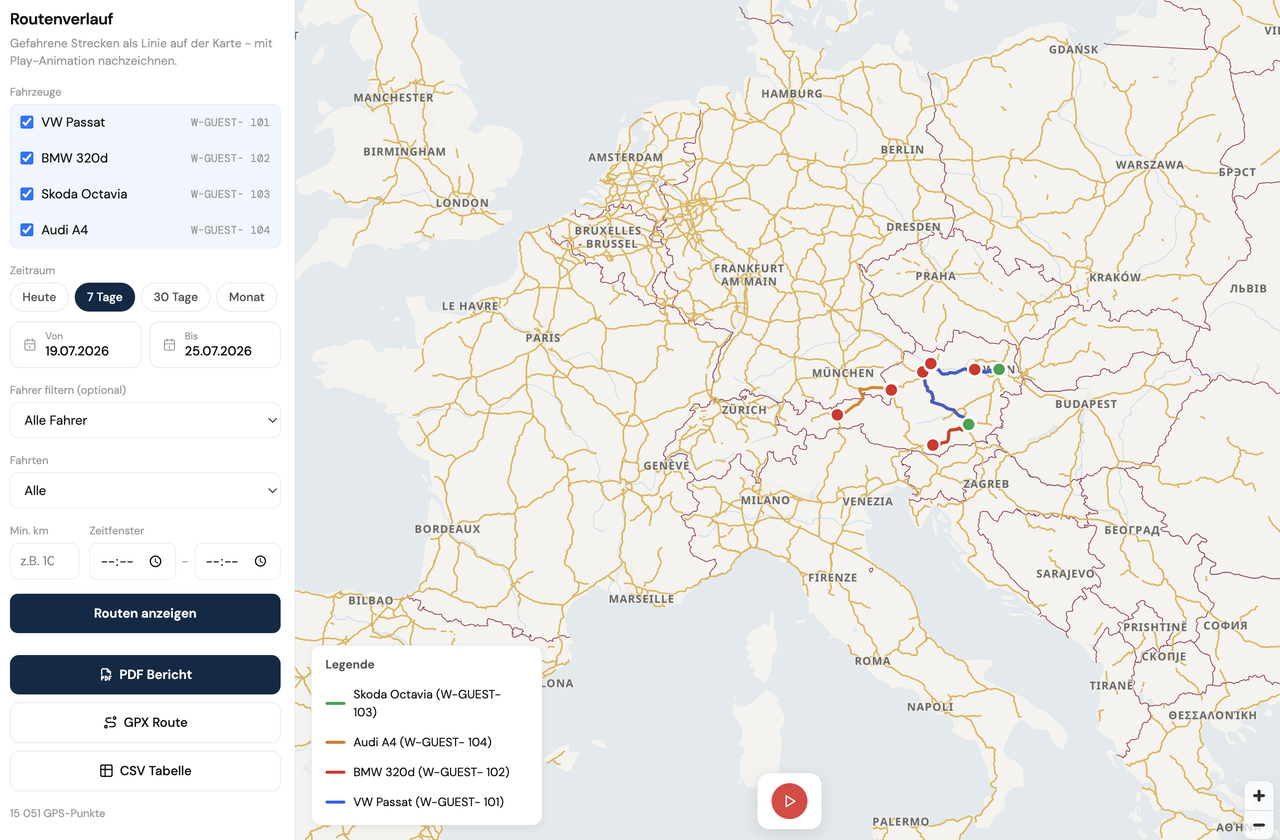
Dwell is the most invisible cost factor in the fleet: waiting at ramps, long gaps between jobs, vehicles standing unused for half a day. The stop history makes these patterns visible, not to single people out, but to spot structural problems: which customer regularly blocks an hour at the ramp? Which vehicle is chronically underused? Which KPIs matter for that is in the fleet KPIs guide.
7. Automatic logbook for accounting and the tax office
The logbook is a by-product of tracking: every trip is captured and classified, the export for accounting or the tax adviser is a click. That saves time and also takes the risk of incomplete handwritten records out of play.
What these benefits have in common
All seven points follow the same pattern: information that previously had to be asked for, estimated or reconstructed is simply there. The effect therefore depends less on fleet size than on the communication effort a company currently spends on location questions. Rule of thumb: anyone who makes more than a handful of location calls a day recoups a system like TrackLog through the time saved. At 9.90 € per vehicle and month the threshold is low.
How the technology behind it works is explained in the foundation article GPS fleet tracking. The full feature set is on the features page.
Conclusion
Real-time tracking does not pay for itself through one spectacular effect, but through many small, daily ones: calls saved, reliable promises, automatic evidence, faster decisions. To test the effect in your own operation: Order now. The device arrives by post, plugged in in under 1 minute, cancel monthly.
Frequently asked questions
What is the difference between real-time tracking and ordinary GPS location?
Is real-time tracking worth it for small fleets?
Do drivers notice a difference in daily work?
Does real-time tracking work abroad?
See the fleet live. Today.
The device arrives by post. Plugged in in under 1 minute, cancel monthly.
Order now